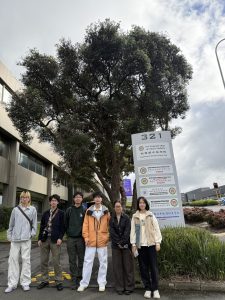
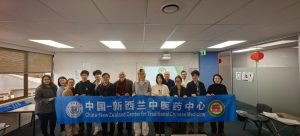
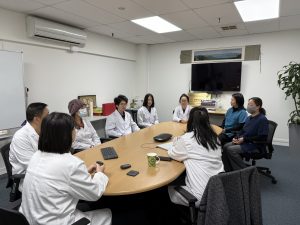
In the winter of 2026, New Zealand College of Chinese Medicine (NZCCM) welcomed six medical students from Zhejiang Chinese Medical University (ZCMU) to Auckland for a four-week overseas study programme.
The programme was carefully designed around the New Zealand healthcare system, Chinese medicine regulation and clinical practice, medical education, Māori perspectives on health, and cross-cultural communication. Through lectures, clinical placements, cultural visits, and student exchanges, NZCCM aimed to help students understand how Chinese medicine is practised, taught, and developed within a different healthcare and cultural environment.
 |
 |
Connecting Classroom, Clinic and Culture
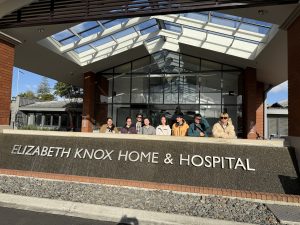
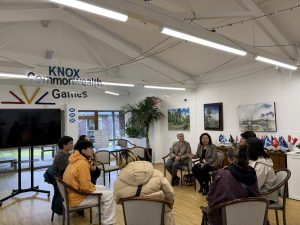
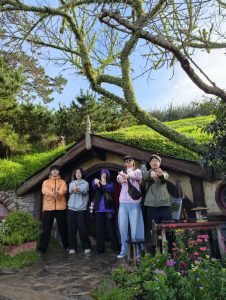
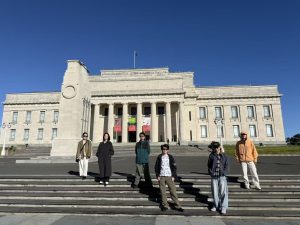
To meet the students’ academic and professional needs, NZCCM developed a progressive learning pathway combining academic study, clinical observation, and cultural immersion. Through sessions such as Understanding the New Zealand Healthcare System and Māori Cultural Frameworks for Health and Wellbeing, students gained insight into New Zealand’s healthcare environment and Māori concepts of health. They also explored the similarities between Māori holistic health models and Chinese medicine concepts such as holistic wellbeing and the harmony between humans and nature. Beyond the classroom, students visited Auckland War Memorial Museum and local healthcare and cultural organisations. These experiences helped place academic learning within the wider social and cultural context of Aotearoa New Zealand.
 |
 |
Experiencing Chinese Medicine in Clinical Practice
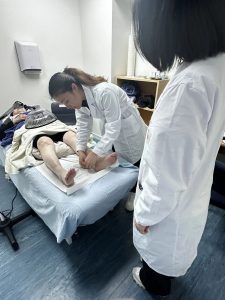
Clinical training formed a central part of the programme. Students rotated through acupuncture and herbal medicine clinics and participated in practical sessions including tongue diagnosis, pulse diagnosis, Balance Acupuncture, and therapeutic massage. These experiences encouraged students to consider an important question: How does Chinese medicine adapt when practised outside its original cultural environment? By observing local practitioners, students saw how classical Chinese medicine theory, clinical experience, and pattern differentiation are applied to meet the needs of patients from diverse cultural backgrounds.
The placements offered more than technical training. They provided a valuable opportunity to understand how Chinese medicine can adapt, develop, and become locally relevant in an international healthcare setting.
 |
 |
China–New Zealand Student Dialogue on Chinese Medicine Education
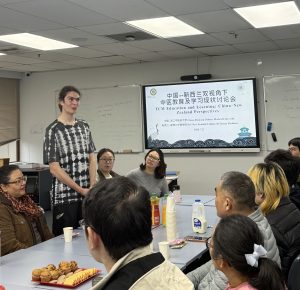
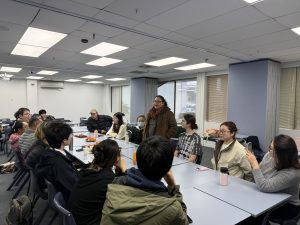
A highlight of the programme was the student forum: “Chinese Medicine Education and Learning: Perspectives from China and New Zealand.” NZCCM brought together students from the University of Auckland, NZCCM, and ZCMU for an open discussion on medical education and the future of Chinese medicine learning. Students explored questions such as:
- How do students in China and New Zealand begin their Chinese medicine education?
- How do different education systems balance theory, clinical practice, and professional skills?
- How can Chinese medicine be explained effectively in an English-speaking and multicultural society?
- What knowledge and competencies should future Chinese medicine practitioners develop?
ZCMU students shared their experience of systematic foundational training in China, while NZCCM students discussed the value of early clinical exposure and learning directly from local patients. University of Auckland students contributed perspectives from contemporary medical education.
The discussion went beyond a conventional institutional visit. It became a genuine exchange between young medical students from different educational and cultural backgrounds, encouraging them to reconsider both the present and future of Chinese medicine education.
 |
 |
Learning Through Cultural Diversity
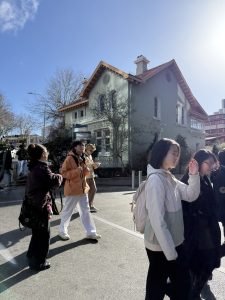
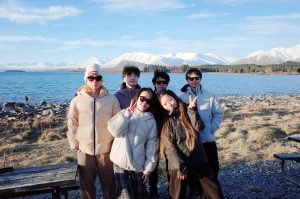
Cultural understanding was another important part of the programme. Through Māori cultural learning, museum visits, healthcare visits, and interaction with local teachers and students, participants experienced the multicultural character of New Zealand firsthand.
For many students, the similarities between Māori holistic health concepts and traditional Chinese medical philosophy were especially thought-provoking. These encounters demonstrated that while medical traditions arise from different cultures, they may share common concerns about the relationship between body, mind, family, community, and environment.
A Four-Week Journey, A Continuing Exchange
Over four weeks, students moved from initial curiosity to clinical observation, intercultural dialogue, and deeper reflection on the international development of Chinese medicine. As a Chinese medicine education institution rooted in Aotearoa New Zealand, NZCCM believes that the international development of Chinese medicine depends not only on the transmission of knowledge, but also on educational exchange, cultural understanding, and meaningful dialogue between people. Oceans may separate us, but medicine connects us.
NZCCM looks forward to strengthening cooperation with Zhejiang Chinese Medical University and other universities in China, creating more opportunities for young students to understand Chinese medicine through international learning, clinical experience, and cross-cultural exchange.
 |
 |
 |
 |
Student Reflections
Wang Boxuan, ZCMU
The programme gave me valuable exposure to New Zealand’s healthcare system, acupuncture, herbal medicine, pulse diagnosis, and clinical practice. Communicate with local students also helped me better understand both New Zealand culture and overseas Chinese medicine education.
Mao Lingxiao, ZCMU
Comparing Chinese medicine concepts of balance and holistic health with Māori models of wellbeing was especially meaningful. It helped me see how traditional medical ideas can connect across cultures.
Luo Aopei, ZCMU
The programme broadened my understanding of Chinese medicine in New Zealand, including its relationship with the wider healthcare system and complementary therapies. The clinical techniques we encountered also gave me new directions for future study.
Liang Kaiming, ZCMU
The experience showed me that medicine requires more than technical knowledge. Cultural respect, humanistic care, and an international perspective are equally important.
Jiang Shuyu, ZCMU
What impressed me most was not only the clinical training, but the dialogue with local students. I began to see Chinese medicine not simply as a heritage, but as a living language that can connect people across cultures.
Guo Kening, ZCMU
As a first-year student, this was my first overseas study experience. Early clinical exposure and Māori perspectives on health gave me a new understanding of medical education and strengthened my confidence in the global future of Chinese medicine.
Reporter: Wenpei Zhu August 17, 2026